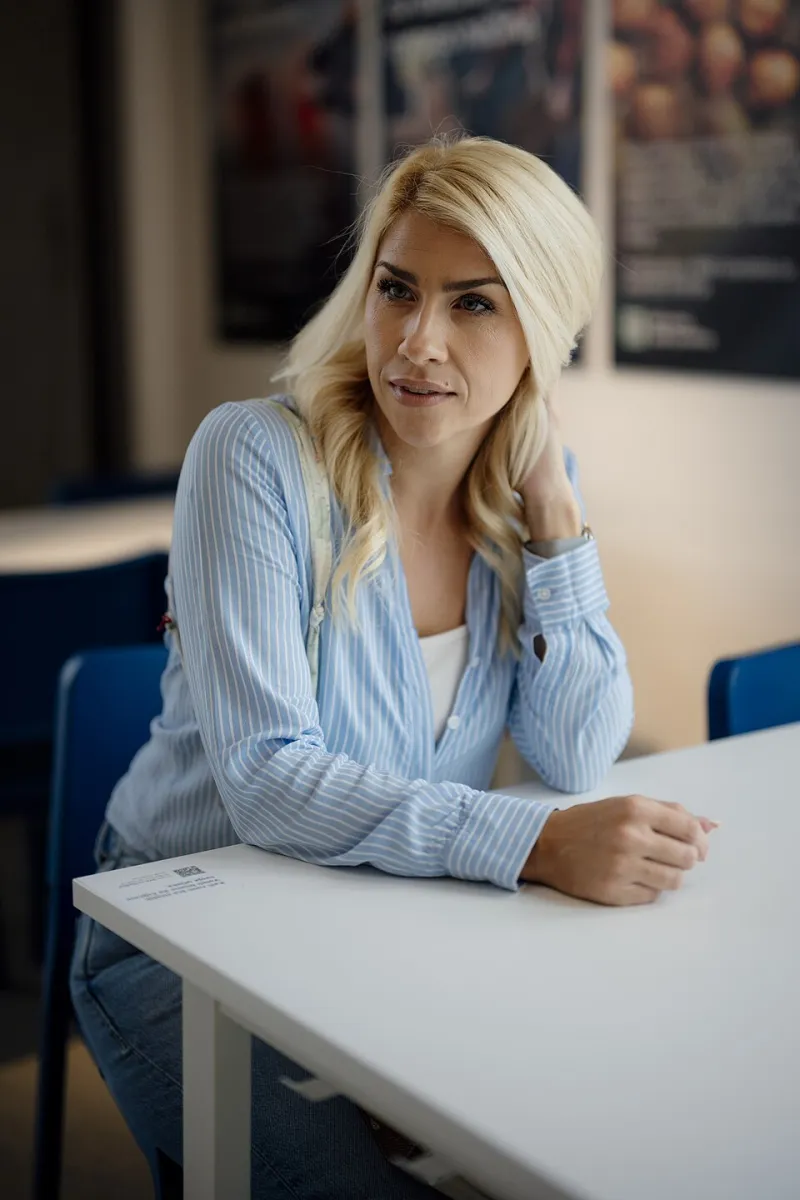
She Blew It All Up and Built Something Better: Ariel Fisher's Most Unexpected Career Pivot

Photo: Serene Wang, CC BY-SA 4.0, via Wikimedia Commons
There's a version of this story that gets told clean. The pivot was intentional. The timing was perfect. She saw it coming and made a smart, strategic call. That version is a lot easier to package — but it's not what actually happened.
The truth, as Ariel Fisher tells it, is messier, louder, and honestly a lot more interesting.
The Project She Doesn't Talk About Enough
A few years back, Ariel was deep into a creative direction that looked good on paper. Like, really good. She had the partnerships lined up, the content calendar mapped out, the aesthetic dialed in. From the outside, everything was clicking. Internally? She describes it as "running on fumes and denial."
The project — a long-form content series she'd spent months developing — wasn't landing the way she'd imagined. Not just in terms of numbers, though those weren't where she needed them to be either. It was more fundamental than that. She'd wake up in the morning and feel nothing about it. No excitement, no curiosity, none of that creative itch that had gotten her into this whole thing in the first place.
"I kept telling myself it just needed more time," she's said. "But deep down I knew I was making content I didn't care about for an audience I wasn't actually connecting with. That's a rough place to sit."
She sat in it for longer than she'd like to admit.
The Moment It Cracked
The breaking point wasn't dramatic. There was no blow-up, no single catastrophic failure. It was quieter than that — which, in some ways, made it harder to ignore.
Ariel was reviewing footage from a recent shoot, something she'd done hundreds of times before, and she just... stopped. Not because something was wrong with the footage. Because she realized she didn't recognize the version of herself on screen. Not in a deep existential way, but in a very practical, grounded one: this isn't who I am or what I want to make.
She shelved the series. Quietly, without a big announcement. And then she did something that felt terrifying at the time — she went back to the stuff that had originally made her want to create in the first place.
Stripping It Back to Find What Stuck
The pivot wasn't a rebrand in the traditional sense. There was no new logo, no sweeping announcement, no carefully crafted "I have some exciting news" post. It was more like a gradual shedding — letting go of the parts that felt performative and leaning harder into what felt real.
For Ariel, that meant getting more personal. More direct. Less polished in the ways that don't actually serve the audience, and more intentional in the ways that do. She started making content that reflected how she actually thinks, what she genuinely finds interesting, the questions she's turning over in her own head.
And something shifted.
The audience she'd been chasing kind of faded away — but the audience that stuck around got louder. More engaged. More invested. The comments stopped being surface-level and started being actual conversations. People weren't just watching; they were responding like they knew her, because in a lot of ways, they finally did.
"That's when I understood the difference between having viewers and having a community," she's reflected. "One of those things is a metric. The other one is real."
What She Actually Lost (And Why That Part Matters)
Here's the part of the reinvention story that usually gets skipped: the loss. Because there absolutely was some.
Walking away from that original direction meant walking away from certain partnerships that had been attached to it. It meant a dip in momentum at a time when momentum felt crucial. It meant explaining to people in her professional circle that she was changing course — and not everyone got it right away.
There were awkward conversations. There were deals that didn't make sense anymore. There was the very human experience of watching something you built just... not become what you thought it would be.
Ariel doesn't sugarcoat that part. In fact, she's pretty insistent that the loss was necessary — not in a "everything happens for a reason" kind of way, but in a very practical sense. She needed to feel what it was like to let go of something that looked like success from the outside, so she could get clear on what success actually meant to her.
"You don't know what your real priorities are until you have to choose," she's said. "And choosing is uncomfortable. But it's also clarifying in a way that nothing else really is."
The Lesson That Actually Stuck
If there's a single takeaway from Ariel's pivot — and she'd probably push back on reducing it to just one — it's this: alignment isn't a luxury. It's the whole thing.
You can optimize every other variable. You can nail the production quality, the posting schedule, the SEO, the brand partnerships. But if the core of what you're making doesn't actually reflect who you are and what you care about, audiences feel it. Maybe not immediately. But eventually.
Ariel felt it before her audience did — which is probably why the pivot happened when it did, rather than after a more public unraveling.
The version of her work that exists now — the stuff being made here at Ariel Fisher TV, the content that's driving real engagement and real relationships — is a direct product of that uncomfortable, unglamorous course correction. It didn't look like a win when she was in the middle of it. It looked like backtracking. Like uncertainty. Like not having it figured out.
Turns out, not having it figured out was exactly the right place to start.
What's Different Now
Ask Ariel what changed after the pivot and she'll give you a pretty straightforward answer: she stopped making content for the version of her career she thought she was supposed to have, and started making it for the one she actually wants.
That sounds simple. It wasn't. But the work on the other side of it? Feels completely different. More sustainable. More honest. More like something she'd actually want to watch herself.
And if the audience response is any indication, they feel that difference too.