Dollars, Deals, and No More Secrets: How Ariel Fisher Made Peace With Talking About Money
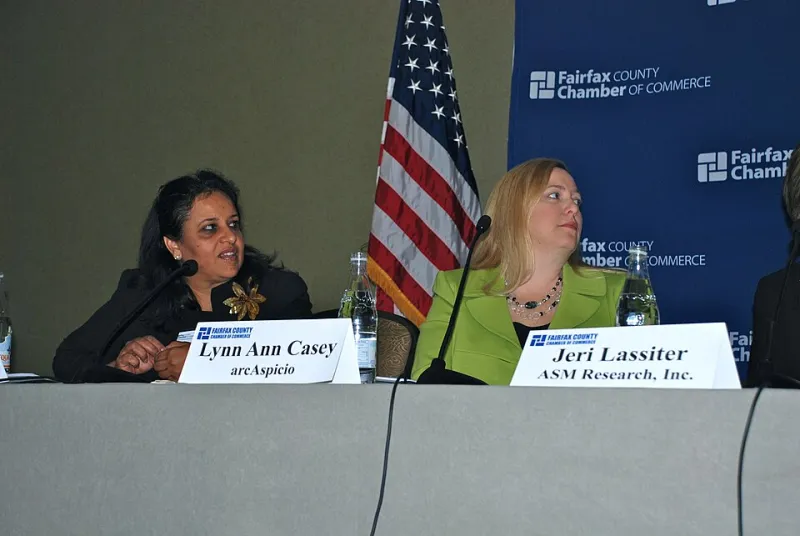
Photo: Fairfax County Chamber of Commerce, CC BY 2.0, via Wikimedia Commons
There's an unwritten rule in the creator economy that most people follow without even questioning it: don't talk about what you actually make. Keep the numbers vague, the revenue streams mysterious, and the financial stumbles completely off the record. For a long time, Ariel Fisher played by that rule just like everyone else.
Then she decided to blow the whole thing up.
What happened next — the conversations it started, the community trust it built, and the career clarity it gave her — is one of the most quietly transformative chapters in Ariel's story. And it's one she's finally ready to talk about in full.
The Silence That Felt Like Protection
When Ariel was first building her brand, keeping finances private felt like the smart move. The logic made sense on the surface: share your wins, protect your numbers, and never let anyone know when things aren't going the way you planned. It's the kind of thinking that gets passed around creator circles like gospel.
But over time, that silence started to feel less like protection and more like a wall — something that kept her audience at arm's length and kept her from having honest conversations even with herself.
"I realized I was performing a version of success that wasn't entirely real," Ariel has said. "I wasn't lying, exactly. But I wasn't being fully honest either, and my audience could feel that gap even if they couldn't name it."
The pressure to appear perpetually profitable is real, especially in a media landscape where everyone's highlight reel is front and center. Sponsorship announcements, brand deal reveals, and subscriber milestones get celebrated loudly. The months where income dips, the investments that don't pan out, the brand partnerships that looked great on paper but paid less than expected — those stories stay hidden.
Ariel got tired of hiding them.
What Transparency Actually Looks Like
When Ariel started opening up about money, she didn't just drop a single income report and call it a day. It was more gradual than that — a comment here, a candid moment there, until the conversation became a consistent thread running through her content.
She talked about the revenue streams that actually moved the needle for her and the ones that sounded impressive but barely covered the cost of running them. She got honest about what brand deals typically pay at her level of reach, demystifying a process that a lot of her audience had never seen from the inside. She even addressed the failed investments — the tools, the platforms, the business ideas that didn't work out the way she hoped.
None of it was performative poverty or manufactured struggle. It was just real information, delivered without the usual spin.
For her US audience — many of whom are either creators themselves or people curious about what this industry actually looks like from the inside — that kind of transparency was genuinely rare. Most of what people see about the creator economy is either aspirational content from people who've already made it or cautionary tales from people who burned out. The middle ground, the messy and honest day-to-day financial reality, almost never gets airtime.
Ariel gave it airtime.
The Audience Response Nobody Predicted
Here's what surprised even Ariel about this shift: the response wasn't just positive. It was deeply personal.
People started reaching out not just to say "thanks for sharing" but to share their own experiences. Creators who were silently struggling with the same questions. People working regular jobs who had never considered building a personal brand but suddenly felt like it was something they could actually understand. Young women, in particular, who had been told their whole lives not to talk about money and were hungry for someone to model a different approach.
The comments, the DMs, the conversations at events — they all pointed to the same thing. Financial honesty, it turns out, is a form of community building that almost nothing else can replicate.
There's research to back this up, too. Studies on financial transparency in professional contexts consistently show that when people in visible roles talk openly about compensation and income, it reduces anxiety in the people watching them and creates more realistic expectations across the board. In the creator space, where comparison culture runs rampant and burnout is practically a rite of passage, that kind of grounding is genuinely valuable.
Ariel didn't set out to do something socially meaningful. She just got tired of keeping secrets. But the impact landed the same way.
Rewriting the Rules for Herself
One of the more practical outcomes of this shift was that it forced Ariel to get much clearer about her own financial picture. When you're going to talk openly about what you earn, you have to actually know what you earn — down to the details, not just the rough ballpark.
That process of getting rigorous about her finances, tracking every revenue stream, understanding where her income was stable versus volatile, knowing exactly what her operational costs looked like — it changed how she made decisions. She started turning down deals not just because they didn't feel right creatively but because the math genuinely didn't work. She started investing in parts of her brand that had clear return potential rather than just the ones that seemed exciting.
In other words, talking about money made her better at managing it.
"You can't be strategic about something you're not willing to look at directly," she's pointed out. That sounds simple, but for a lot of creators who got into this because of a passion rather than a business plan, it's a genuinely hard shift to make.
Why This Matters Beyond Ariel
Ariel Fisher isn't the first person to advocate for financial transparency in the creator economy, and she won't be the last. But the way she's approached it — not as a brand stunt or a viral moment, but as a consistent, evolving conversation with her community — sets her apart.
The creator economy is still relatively young, and a lot of its cultural norms were inherited from industries that had very good reasons to keep compensation secret. Those reasons don't necessarily apply here. When creators are open about what they earn, it raises the floor for everyone. It helps newer creators negotiate better. It helps audiences understand the value of the content they consume. It makes the whole ecosystem a little more honest.
Ariel's version of this conversation is personal and specific to her experience, but the ripple effects are broader than that.
The Ongoing Conversation
This isn't a story with a tidy ending because the conversation is still happening. Ariel keeps talking about money — what's working, what isn't, what she's learning, what she wishes she'd known earlier. It's become one of the defining features of what makes her brand feel different from the polished, carefully managed personas that dominate so much of the content landscape.
Her audience knows they're getting the real version. Not the highlight reel, not the curated success story — the actual thing.
And in a world where authenticity gets thrown around so casually it's almost lost its meaning, Ariel Fisher is out here proving that it still means something when it's genuine.