The Apology That Taught Me More Than Any Win Did
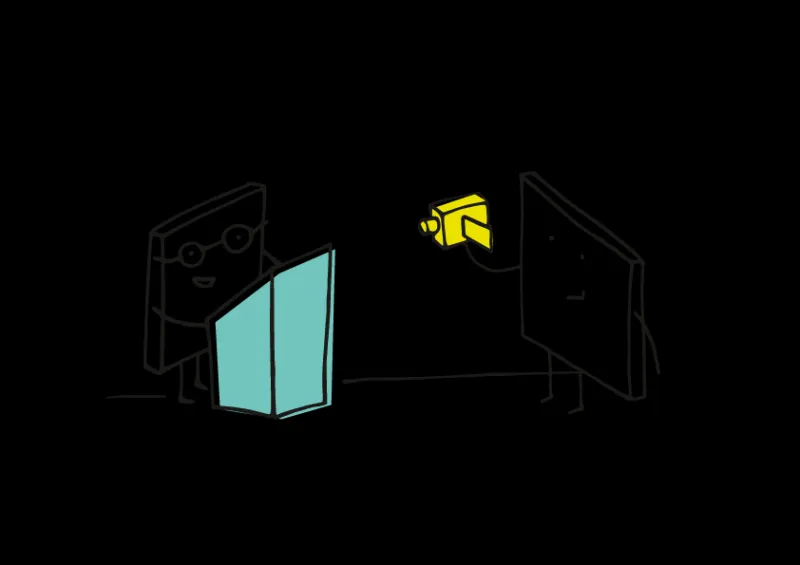
Photo: SynLLOER, CC0, via Wikimedia Commons
I have posted hundreds of videos. The one with the most views is not the one I'm proudest of. It's the one where I sat down and said I got it wrong.
It's still strange to type that. But it's also the single most useful thing that's happened to me in this job, and I've been meaning to write it down properly for a while. Not as a how-to, because I don't think there is one. More as a record of what the inside of that week actually felt like, since the outside version was a forty-two second clip that people watched on the bus.
What actually happened
I made a mistake that hurt people. Not a career mistake — I'm not talking about a bad brand deal or a project that tanked. I'm talking about getting something factually wrong in a way that misrepresented a group of people, and then being confidently wrong about it to a large audience.
I found out the way everyone finds out now: a comment, then twenty comments, then a screenshot of my own words with a red circle around them. And my first honest reaction, the one I had before I had a thought about having a reaction, was defensiveness. Full-body, lizard-brain defensiveness. My brain produced a list of reasons it was basically fine, and it produced that list in about four seconds.
I want to be clear about that part, because I think people assume the ones who apologize well are the ones who felt bad immediately. I didn't. I felt cornered first. The feeling bad came later, and it came slower, and it came from actually reading what people said rather than skimming it.
The pressure to perform contrition
Here's what nobody tells you: when you're in that position, a whole industry of advice materializes. Some of it from people who care about you. A lot of it from people who care about your numbers.
The advice mostly sounds like this. Keep it short. Don't explain, it reads as excuse-making. Show emotion but not too much. Post within twenty-four hours. Don't turn comments off, but don't reply to individual comments either. Use the word 'unfortunately' zero times.
All of that is optimization. And optimization is exactly what makes an apology feel fake. Audiences have gotten terrifyingly good at detecting the difference between someone who is sorry and someone who is managing a situation. We've all watched a statement that hit every structural mark and felt like a press release from a company that makes car parts.
I wrote three versions. The first was tight and clean and had no pulse. The second overcorrected and turned into a therapy monologue about my own feelings, which is the other failure mode — centering the person who messed up. The third was the one I posted, and it took me about two hours to write because I kept deleting the parts where I sounded good.
The words that turned it around
Three things did the heavy lifting.
I named the specific thing. Not 'I'm sorry for what happened' — that phrase makes the event sound like weather. I said what I said, roughly where I said it, and who it affected. Specificity is the whole ballgame. Vagueness is what people hear as hiding.
I didn't explain the intent. My intent was not the story. Nobody who was affected by the mistake needed a narration of what I was trying to do, because what I was trying to do wasn't the reason their day got worse. I mentioned intent once, in a single clause, and moved on.
I said what would change. Concretely. I told people I was going to stop doing a specific thing on camera, and then I actually stopped doing it, and it's been roughly two years and I still haven't done it. A promise you can be checked on is worth more than a paragraph of remorse you can't.
I also left the video up. That was not a unanimous decision in my group chat. But taking it down would have made the situation about cleaning my feed instead of about the mistake, and honestly, people had already screenshotted it.
What I learned about audiences
I went into that week braced for the worst, and what I got instead was something closer to relief. Not from everyone — there were absolutely people who were done with me, and they're allowed to be. But a lot of the response was some version of: okay, they listened.
And I think the reason is that audiences are tired of being handled. Every platform is full of creators doing crisis choreography and brands doing tone-deaf pivot posts, and people can clock it instantly. What they rarely get is somebody saying, plainly, here is what I did, here is why it was wrong, here is what changes. No music. No slow zoom. No dramatic pause before the word 'accountability.'
That's the part I keep coming back to. Getting it wrong in public is scary because it feels like the end of something. In practice it was the first time I felt like my audience and I were actually on the same side of a problem instead of negotiating across it.
I'd rather be trusted than optimized. Took me getting it wrong in front of everyone to understand the difference.